
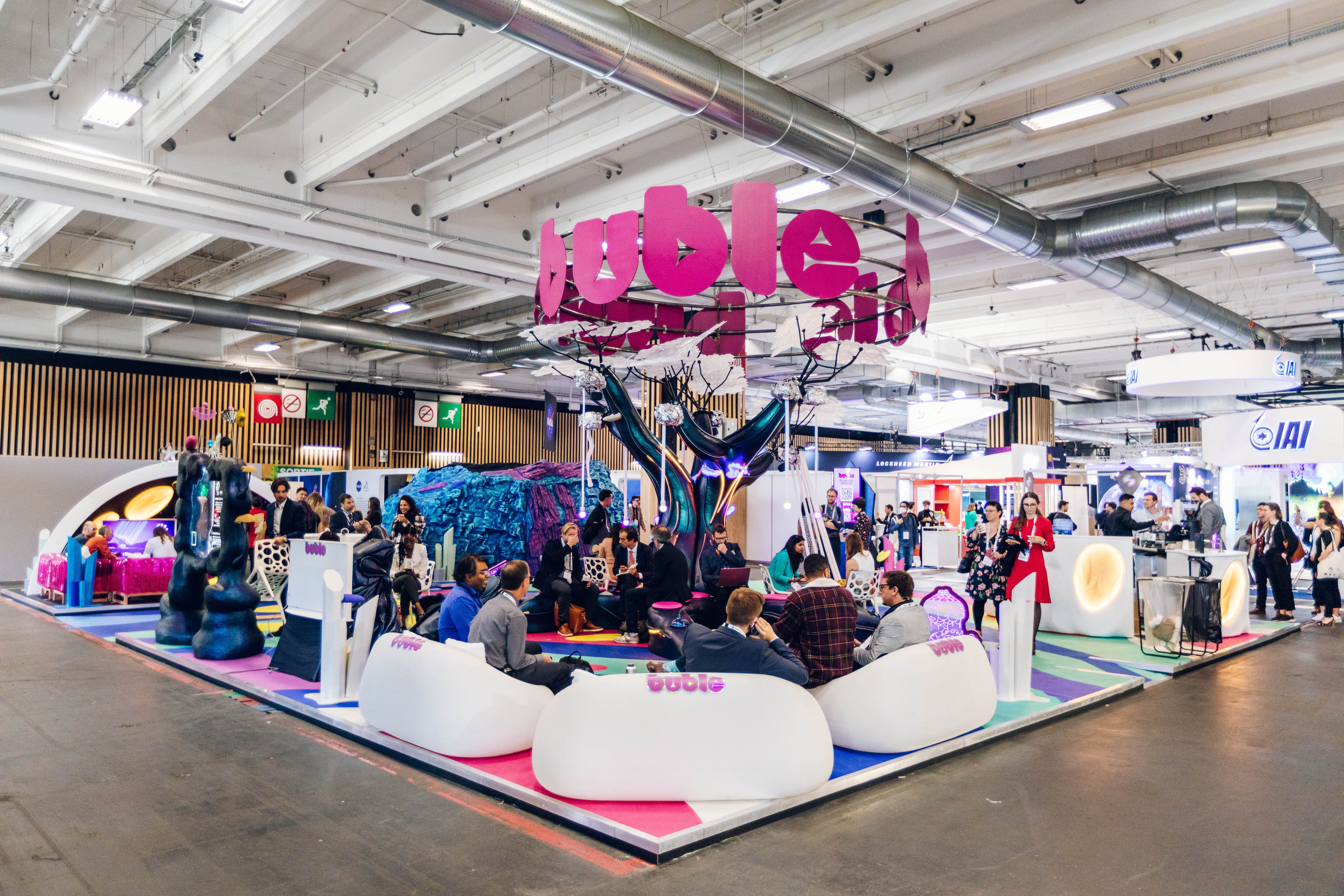
Almost every inline Miami exhibit is really a back wall plus a floor. It is the surface attendees see from down the aisle, the backdrop in every photo, and the first thing that says whether a brand belongs at the show. Getting it right matters more than any accessory.
The formats overlap by purpose. Silicone-edge (SEG) fabric walls give a smooth, premium printed surface on a rigid frame. Pop-up displays trade some finish for fast, tool-free setup. Step-and-repeat backdrops put a logo pattern behind a photo or media moment, common at the press and partner events that surround shows like Art Basel and the F1 Miami Grand Prix.
Trade Show Logistics of Miami specs the back wall to the venue and the workload at once. A wall built for the long sightlines of the Miami Beach Convention Center, with its nearly 500,000 square feet of exhibit space, has to read at distance, while a wall that ships to several Florida dates has to rebuild cleanly every time.
What we settle first on a back wall
Pick the system: SEG fabric for a smooth premium face, pop-up for fast self-setup, or a hard panel wall when shelving and mounting are needed.
Confirm the legal back-wall height for your inline space so the design is approved before the graphic is printed.
Design the graphic to read from across the hall, with a headline that survives distance rather than fine print that disappears past the first row.
Plan mounting for any shelves, monitors, or product so weight and fixings are built into the wall, not improvised on the floor.
Build the case and labor plan around how often the wall ships, since an SEG wall that travels needs durable hardware and a repeatable build sequence.
SEG, pop-up, or hard panel
SEG fabric walls are the current standard for a clean look. A dye-sublimated graphic with silicone edging snaps into an aluminum frame for a smooth, frameless face, and the fabric packs small for travel.
Pop-up walls remain popular for self-setup. An accordion frame with magnetic graphic panels goes up without tools, which suits exhibitors who build their own booth at Miami shows.
Hard panel walls earn their place when the booth needs to mount shelves, monitors, or heavier product. They weigh more and cost more to ship, so the structure choice is also a freight and labor decision.
Step-and-repeat and media backdrops
A step-and-repeat is a back wall with a repeating logo pattern designed to appear behind people in photos, which is why it shows up at the press, sponsor, and partner events orbiting Miami marquee weeks.
The pattern has to be scaled and spaced so logos stay legible behind a person and in a cropped photo, not so dense it turns to noise or so sparse a logo never lands in frame.
Tension-fabric step-and-repeats give the flattest, glare-free surface for cameras, which is why they outperform vinyl for media walls at Wynwood and Design District activations.
Designing a wall that reads at distance
On a long Miami exhibit floor, the back wall competes from far away. One clear headline and a strong brand block beat a wall crowded with copy that no one can read past the aisle.
Lighting lifts a back wall above its neighbors. Arm lights or a backlit fabric panel make an SEG wall pop in a hall where dozens of booths are fighting for the same glance.
Mounting is planned, not improvised. Shelves, monitors, and product brackets are engineered into the wall so weight is supported and the floor build does not turn into a problem-solving session.
- Use the format to set the right support scope early.
- Let venue reality shape how aggressive the build or production plan can be.
- Protect the audience-facing result before trimming the parts that make it work.
Back walls that travel the Florida circuit
A back wall is the part of a booth most likely to be reused, so durability is the spec that protects the budget. SEG hardware and quality fabric rebuild cleanly across a season of shows.
For exhibitors running Miami plus Broward or Orlando, we store the wall, swap printed graphics between campaigns, and re-crate it so the same structure carries new messaging without new tooling.
A repeatable build sequence matters as much as the hardware. We document how the wall goes together so any crew, in any Florida hall, lands the same clean result inside the move-in window.
Back wall questions
What is an SEG back wall?
SEG stands for silicone-edge graphic. A dye-sublimated fabric panel with a silicone edge strip pushes into a channel on an aluminum frame, giving a smooth, frameless printed wall that packs small and rebuilds cleanly.
SEG fabric or pop-up back wall?
SEG gives a smooth, premium face and is great for travel; pop-ups go up without tools and suit self-setup. The choice depends on the look you want and who is building the booth at the show.
What is a step-and-repeat backdrop?
A step-and-repeat is a back wall printed with a repeating logo pattern, designed to sit behind people in photos. It is common at press, sponsor, and partner events around Miami marquee weeks.
How tall can my inline back wall be?
Inline back-wall height is set by the venue and show rules, commonly limited so it does not block neighbors. We confirm the legal height before designing so the wall is approved before it is printed.
Can I mount monitors and shelves on a back wall?
Yes, if it is planned. Hard panel and reinforced SEG walls support shelves, monitors, and product when the mounting and weight are engineered in. We design fixings up front rather than improvising on the floor.
Will a back wall read from across a Miami hall?
It will if it is designed for distance: one clear headline, a strong brand block, and lighting. On long floors like the MBCC, a clean lit wall beats one crowded with small copy.
Can the same back wall be used at several shows?
Yes. The back wall is the most reusable part of a booth. We build durable SEG or panel walls, store them, and swap graphics between Miami, Broward, and Orlando dates so the structure serves many shows.