
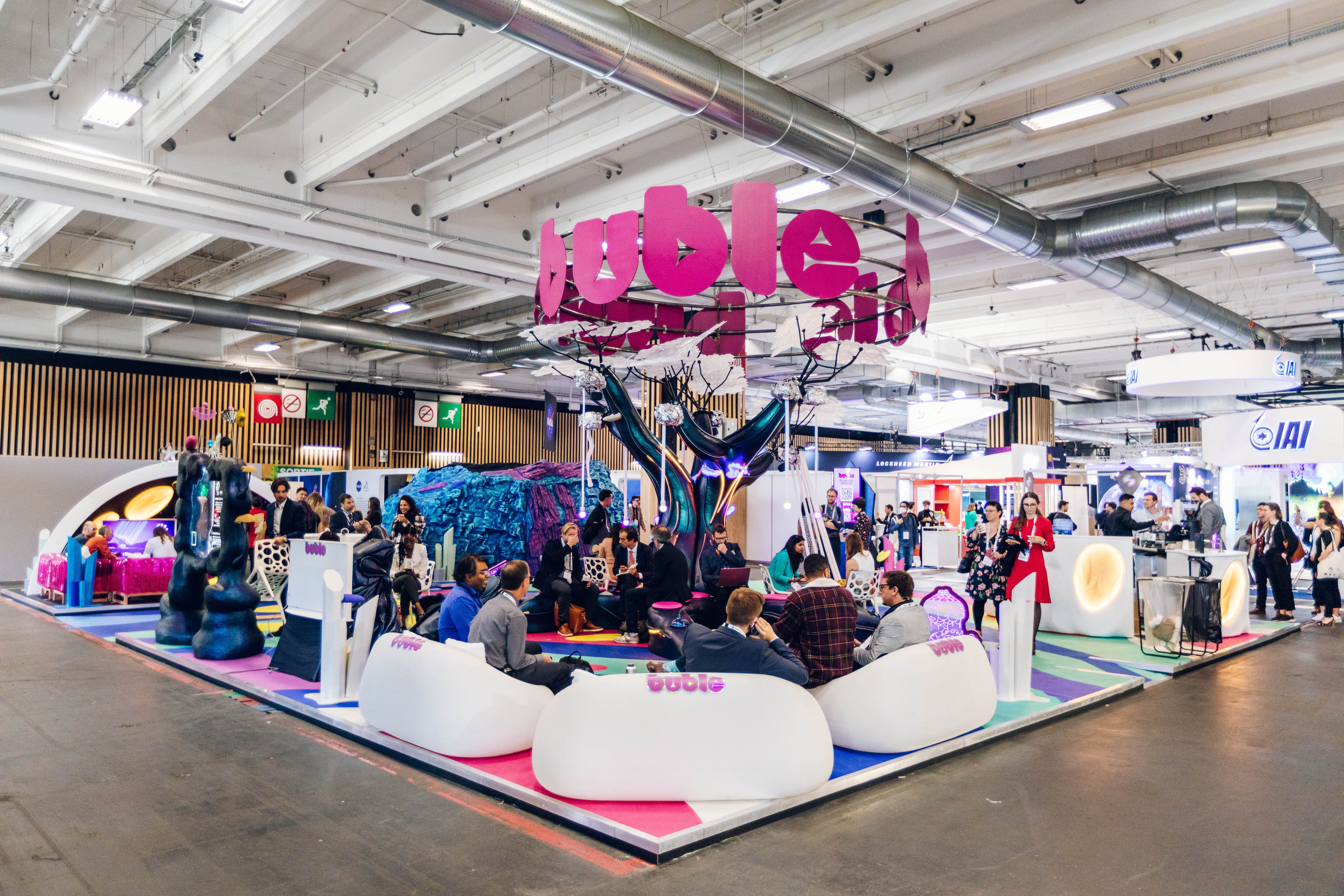
The 10x20 is the workhorse upgrade for Miami exhibitors who have outgrown a single 10x10 but are not ready for an island. With about 200 square feet along one long back wall, the booth finally has room for a real demo station, a semi-private conversation area, and storage that is not in the way.
The format lives or dies on how the 20-foot run is divided. A 10x20 that tries to spread one message across the whole wall reads weaker than a 10x10; a 10x20 that uses zones, a tall header, and lighting to pull traffic from down the aisle earns its larger footprint.
Trade Show Logistics of Miami plans a 10x20 around the venue and the goal at the same time. At a building like the Miami Beach Convention Center, with nearly 500,000 square feet of exhibit space and long sightlines, a 20-foot back wall has to compete from a distance, so structure, graphics, and overhead signage all get scoped together.
What we settle first on a 10x20
Divide the 20-foot run into purpose: branding header, product or demo wall, and a semi-private meeting or lead-capture corner.
Decide whether a hanging sign is allowed and worth it, since overhead signage rules and rigging labor vary by Miami venue and have to be confirmed early.
Choose a structure (modular system, large tension-fabric wall, or hybrid) based on shipping weight, install labor, and how the booth will reconfigure for future shows.
Plan power and data drops for demos and screens against the venue's electrical order deadlines, which close well before move-in at the convention halls.
Build the freight plan around two to four crates and a confirmed return path so a larger inline booth still strikes on schedule.
When a 10x20 is the right step
Exhibitors move to a 10x20 when one 10x10 can no longer hold a product display, a place to talk, and a spot for staff to stand without blocking the graphic. The extra ten feet buys separation, not simply size.
It is also the format where Miami programs start to look intentional. A divided 20-foot wall with a lit header and a clean demo zone signals a more serious presence than a single inline panel, which matters at competitive shows like eMerge Americas.
The trade-off is freight and labor. A 10x20 usually ships in several crates and frequently needs ordered install labor, so the budget conversation shifts from a self-set 10x10 to a scheduled build.
Laying out 200 square feet
A common, durable layout puts a tall branded header across the center, a product or video wall on one half, and a counter with stools or a small table on the other for conversations.
Storage gets designed in, not added on. A lockable closet built into the back wall keeps cases, coats, and giveaways out of sight, which is the difference between a clean 10x20 and a cluttered one by midday.
Lighting does the heavy lifting at distance. Arm lights or backlit fabric on a 20-foot wall pull eyes from across a hall like the MBCC exhibit floor, where booths compete across very long sightlines.
Venue rules that shape a 10x20
Hanging signs are the first thing to verify. Some Miami venues and shows allow overhead signage for inline booths of this size and some do not, and rigging is venue-controlled labor, so the answer changes the design.
Electrical and data orders for demo screens close before move-in. Missing the advance electrical deadline at a convention venue means paying floor-order rates, which inflates the budget fast.
Material handling still bills by weight. A 10x20 in modular aluminum and fabric lands cheaper than the same booth in heavy laminate panels, so structure choice is also a freight decision.
- Use the format to set the right support scope early.
- Let venue reality shape how aggressive the build or production plan can be.
- Protect the audience-facing result before trimming the parts that make it work.
Reuse across the Miami calendar
A well-built 10x20 is designed to flex. The same panels and hardware that form a 20-foot inline can often split into two 10x10s or scale toward an island, which protects the investment as a brand's show schedule changes.
For teams running Miami plus Broward or Orlando dates, we store the 10x20, swap graphics between shows, and re-crate it so the booth travels the Florida circuit without a rebuild.
Graphics are the cheapest thing to refresh. Keeping the structure constant and updating printed fabric between shows keeps a 10x20 current for several seasons without new tooling.
10x20 booth questions
How much space is a 10x20 booth?
A 10x20 is a 10-foot by 20-foot inline space, about 200 square feet, with one 20-foot back wall and open aisle frontage. It is double a 10x10 and the most common step up before an island.
Do I need ordered labor to install a 10x20?
Usually yes. A 10x20 ships in multiple crates and most Miami venues and show contractors expect ordered install labor for a booth this size, though we confirm the specific manual before move-in.
Can I hang a sign over a 10x20 in Miami?
Sometimes. Overhead signage for inline booths depends on the venue and show rules, and rigging is venue-controlled labor. We verify whether a hanging sign is permitted before designing one in.
How should I split a 20-foot wall?
A reliable layout uses three zones: a central branded header, a product or video wall on one side, and a meeting or lead-capture corner on the other, with built-in storage so the floor stays clean.
What does a 10x20 cost to run versus a 10x10?
Expect higher structure, freight, and labor than a 10x10, because the booth ships in more crates and usually needs ordered install. The upside is room for demos and meetings that a 10x10 cannot hold.
How far ahead should a 10x20 be planned?
A custom 10x20 is most comfortable with eight to twelve weeks for design, fabrication, and graphics. Rental 10x20 systems can move faster, especially when graphics are simple.
Can a 10x20 be reused at other Florida shows?
Yes. We design 10x20s to reconfigure and store, then swap graphics and re-crate between Miami, Broward, and Orlando dates so the same booth serves multiple shows.