
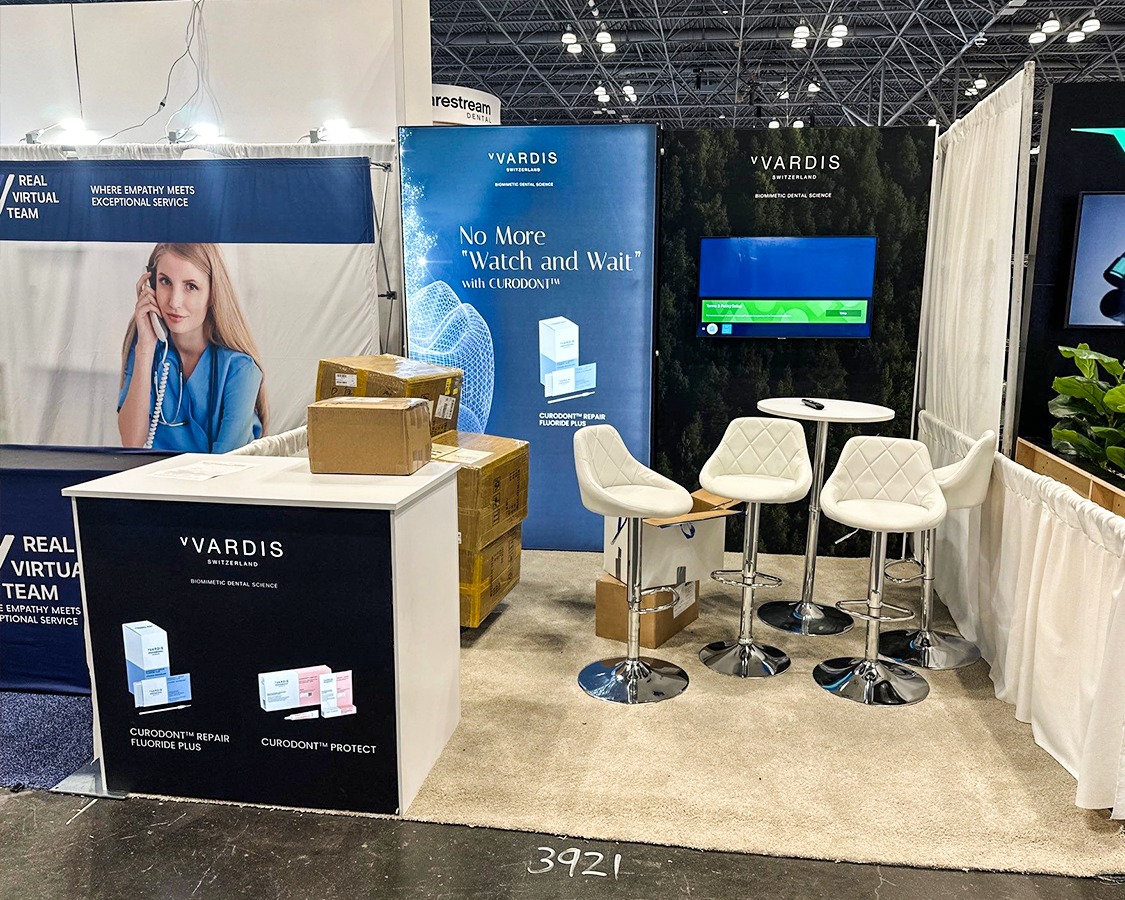
Show-Site Supervision has to hold up under real venue pressure: the install path, labor coverage, freight timing, and field ownership all need to be clear before conditions change.
That is why the operating view matters so much in Miami.
the point is not to add filler. The point is to turn the choice into better event outcomes such as a calmer open with fewer handoff misses and a cleaner path through advance work, live show days, and strike.
What we focus on
Use sequence design sign-offs, labor calls, venue communication, and recovery inside one calendar to decide what has to be settled in advance and what can stay flexible until the venue confirms live conditions.
Check Show-Site Supervision against the Biltmore Hotel Miami - Coral Gables so the service or format is formed by the building instead of by assumption.
Keep the budget tied to a calmer open with fewer handoff misses rather than to a checklist of disconnected add-ons.
The Miami event landscape
Miami is a working trade show market.
350,000 square feet of contiguous exhibit space plus a 31,639-square-foot meeting venue, with future campus expansion language above 1.2 million square feet, which sets the practical ceiling for a booth program working the market.
Miami venues we work
the plan has to match the specific building.
Loews Miami Beach Hotel is one of the anchors. Located directly on the Atlantic just one block south of Lincoln Road , the resort’s Art Deco-inspired tower crowns a 790-room destination that is instantly recognizable.
- Tie the scope to real move-in and strike windows instead of default assumptions.
- Check service orders, venue communication, and labor timing against the live venue documents.
- Use the venue to decide how much field coverage the job truly needs.
Operational rules on the Miami floor
Miami floor operations follow the venue's own manual.
Miami and Broward, house services, and outside-vendor access as venue-manual-driven. Convention centers, airport facilities, resort campuses, and nightlife-oriented event venues do not share one defensible blanket labor rule.
Where Miami shows cluster
North Coastal Extension covers Sunny Isles Beach, Aventura, North Miami, North Miami Beach.
South Miami and Broward Spillover runs across Coral Gables, Coconut Grove, Key Biscayne.
What's included in the project scope
A well-run project has few surprises on install day because the handoffs upstream were tight. A bad one has many, because they weren't.
Those run alongside the engagement rather than inside it.
What an engagement actually looks like
After the brief, the work turns to the building itself.
Install days are owned by a single on-site lead.
Throughout show hours, the on-site lead stays present.
Strike and closeout happen the same day.
Pricing and scheduling
Every project has the same cost drivers.
Lead time drives everything. Custom: 16 to 20 weeks. Rental: 8 to 12.
How project performance gets measured
Most programs in Miami are evaluated on lead-capture volume, meetings booked on the floor, and qualified-pipeline attribution after the show. The booth is a means to those numbers — it is not the number itself.
A week after the show, the booth's actual floor performance is already clearer than any pre-show projection. We document those observations alongside the technical closeout so the next cycle inherits real signal, not nostalgia.
What makes our work different
Trade Show Logistics of Miami keeps the work local.
Consistency across show dates is the other reason to hire local. The same crew that built the booth runs the install, knows the pack-out, and catches the small things — a missing hardware pack, a graphic edge that needs reseating, a storage crate routed to the wrong bay — without needing the client team to intervene.
Frequently asked questions
Do you work at Trump International Beach Resort Miami?
Yes.
How does labor work in Miami?
It runs venue by venue.
How much lead time is ideal?
Custom builds run best with 16 to 20 weeks of lead time. Rentals take 8 to 12 weeks.
What information kicks off a project?
The show, the venue, the booth number, the dates, and a target budget range. From those, an initial scope and a realistic cost come back within a few days.
Who runs the booth on-site?
One named show-site lead runs the install, the show hours, and the strike. That person carries the floor plan and the punch list from crates to doors and reports up once a day.
Can the booth travel to the next city on our calendar?
Same structure, swappable graphics, standard crates.
What happens if something breaks during show hours?
The on-site lead handles it.